What Is Transitional English?
Transitional English is a senior-year high school English class that draws on students’ interests and provides choice to help prepare students for college and/or career readiness. This course:
- Builds on students’ experiential and academic knowledge by integrating reading, critical thinking and analysis, writing, and student and career-related skills in order to enhance students’ success in future college-level courses and career pathways.
- Invites real-world applications and engagement with complex informational texts to help students identify their place within groups, communities, and the world, promote self-discovery, and uncover paths for the future.
- Focuses on growth over the entire course through scaffolding, gradual increase of depth and rigor, and the opportunity to receive feedback, reflect, and revise work multiple times.
At the same time, transitional English:
- Is not “College English.” There is no college credit for Transitional English courses.
- Is not a high school English recovery course.
- Is not a high school English honors course.
- Is not a senior-year literature course.
Course Overview
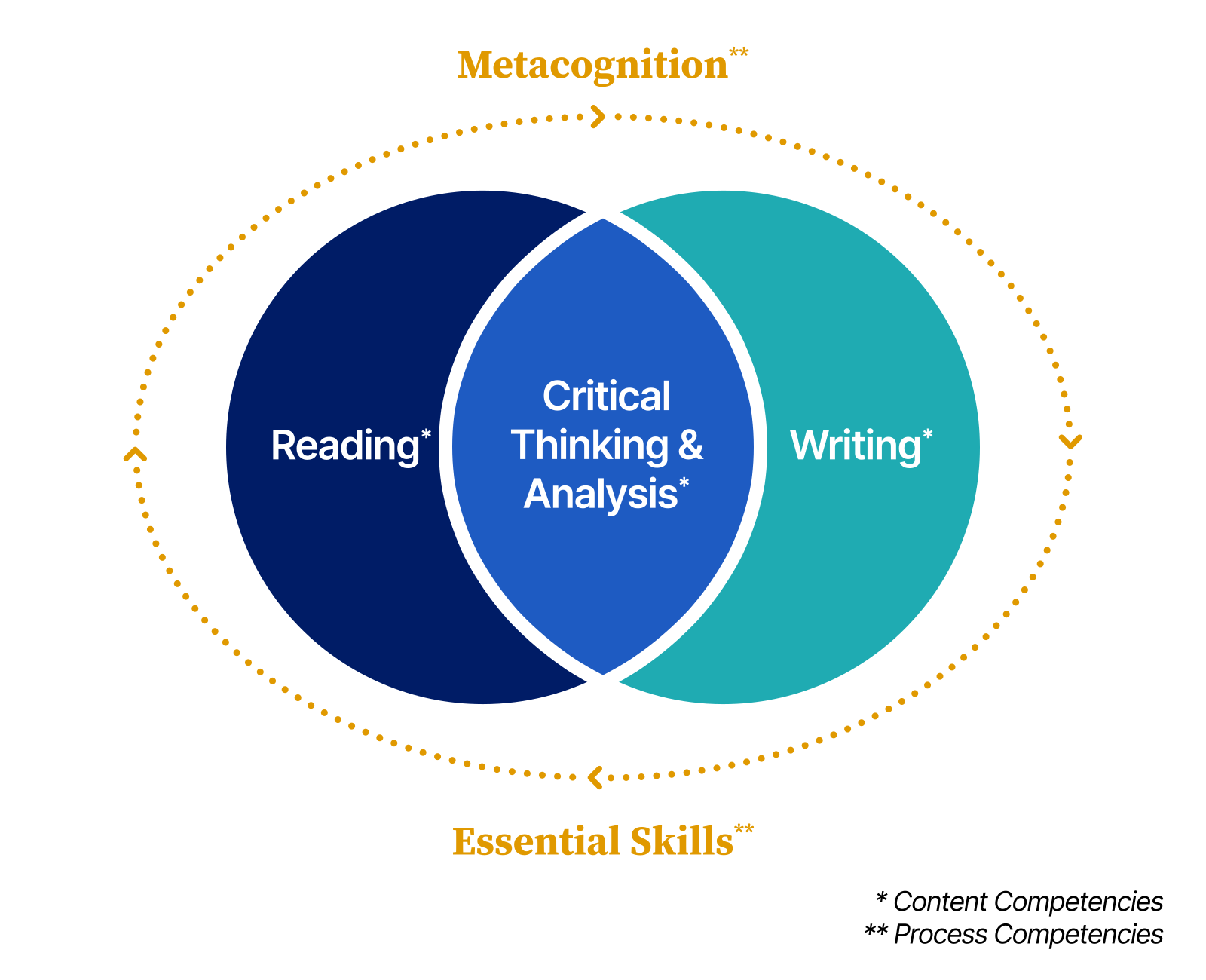
Transitional English instruction builds on students’ experiential and academic knowledge to develop skills in reading, critical thinking and analysis, and writing that will enhance their success in college-level courses across majors and career pathways while aligning with the Illinois Learning Standards.
Metacognition and Essential Skills
- Metacognition, to support students to consider how, why, and when to employ various reading and writing strategies and processes; and
- Essential skills, relating to overall college readiness, employability, and life success.
While the metacognition and essential skill competencies are not assessed directly, they must be integrated throughout transitional English and embedded in course activities.
Texts and Materials
In a transitional English course, students engage with a variety of college-level texts of different types, with a primary focus on non-fiction. The course must use a variety of modes, which may include technical texts, pictures, journal articles, songs, research briefs, videos, and other nontraditional media. Selected materials should be interesting to students, offering choice whenever possible to improve motivation and engagement and to better relate to students’ life and career goals. State-provided resources will include example open-source text and material lists that can be utilized or adapted by local partnerships.
Statewide Advisory Group
To support the implementation of transitional English, a Statewide Advisory Group has been established in partnership with the Illinois State Board of Education, Illinois Community College Board, and Illinois Board of Higher Education. The group comprises secondary and postsecondary representatives who advise on the approach for professional development, curricular resources needed, and a review of materials currently in use by communities implementing transitional English.
Through the collaboration and efforts of this group, statewide resources have been created, and community-created samples have been vetted that align with the Statewide Course Parameters, Competencies, and Policies document to support new and established transitional English courses to meet the requirements to apply for statewide portability.